
Reusable Plastic Packaging: A Buyer’s Guide for Industrial Supply Chains

Updated: Aug 4
Reusable plastic packaging is more than a replacement for disposable cartons or wood. In a well-designed program, the tote, crate, pallet or bulk container becomes part of the operating system: it protects the product, interfaces with equipment, supports identification and returns through the supply chain for another cycle.
For North American procurement, warehouse and operations teams, the best choice depends on the load, handling method, environment and return loop. This guide explains how to compare the main reusable packaging formats and prepare a more useful request for quotation.
For Canadian operations with long freight lanes, seasonal temperature changes or Canada–U.S. return loops, use our Canada-specific reusable packaging planning checklist alongside this product-selection guide.
What counts as reusable plastic packaging?
Reusable plastic packaging includes durable transport and material-handling products designed for repeated trips. Common examples include attached-lid totes, ASRS bins, collapsible returnable crates, plastic pallets, pallet boxes, sleeve packs and specialty parts containers. Unlike one-way packaging, the purchase decision should be based on performance across the complete operating cycle—not only the initial unit price.
Match the format to the workflow
ASRS totes and automation bins
Automated storage, conveyor and robotic systems need repeatable geometry. Base design, dimensional tolerance, deflection, sensor detection and label placement can be more important than nominal capacity. Review JOIN Plastic’s ASRS totes and automation bins and use the ASRS tote selection guide to prepare for system testing.
Collapsible crates and RPCs
Collapsible returnable plastic crates can reduce empty-return volume in produce, food and retail distribution. Compare ventilation, fold ratio, latch durability, stacking alignment, washability and product protection. Explore collapsible crates and RPCs and review the returnable plastic crate buyer’s guide before starting a lane trial.
Plastic pallets
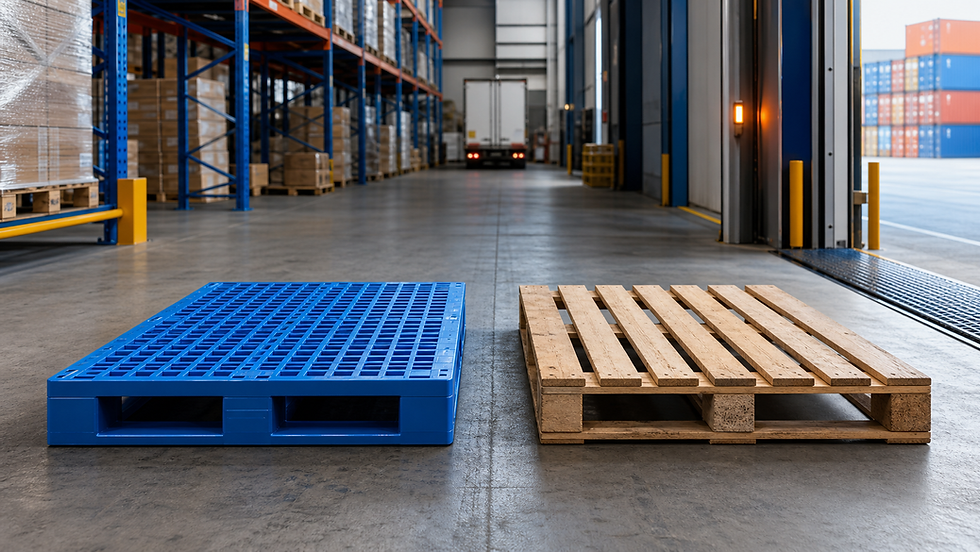
Plastic pallets are used where dimensional consistency, export simplicity, cleanliness or repeatable handling is valuable. The correct deck, runner and reinforcement design depends on static, dynamic and racking loads as well as forklift, pallet-jack, conveyor and ASRS interfaces. Compare JOIN Plastic’s plastic pallet options and read plastic pallets versus wood pallets for a cost-per-trip comparison.
Bulk containers and pallet boxes
For high-volume parts, ingredients and industrial materials, rigid or foldable pallet boxes provide large capacity and unit-load stability. Specify wall style, drop doors, lid requirements, stacking height, fork entry, drainage and whether the container will be stored in racking. See bulk containers and pallet boxes for suitable starting points.
Lidded storage and distribution totes
Attached-lid and separate-lid totes support picking, replenishment, parcel handling and closed-loop distribution. Focus on nest ratio, security, label areas, lid hinges, stacking compatibility and ergonomic handling. Review storage boxes and distribution totes for reusable warehouse and retail applications.
Automotive, ESD and specialty containers
Sensitive components may need conductive or static-dissipative materials, custom dividers, dunnage, reinforced walls or dedicated footprints. Material selection and resistance targets should follow the actual component and facility requirements. Explore automotive, ESD and specialty containers when a general-purpose tote is not enough.
Eight specifications to define before requesting a quote
Outside and inside dimensions, including the acceptable tolerance range.
Maximum payload and how the weight is distributed across the base.
Support conditions: floor, rollers, rails, racking beams, shelves or conveyors.
Handling equipment: forklift, pallet jack, ASRS, AGV, AMR, robots or manual stations.
Operating environment: temperature, humidity, chemicals, dust, moisture and cleaning process.
Identification needs: barcode, label recess, RFID, in-mold marking or serialized tracking.
Return-loop requirements: nesting or folding ratio, empty storage and reverse-logistics method.
Annual volume, colour, logo, lid, divider, dunnage and documentation requirements.
Compare total cost per trip—not only purchase price
A reusable container can cost more than one-way packaging at purchase but less over its service life. Build a lane-specific model that includes expected trips, loss rate, damage, cleaning, repair, return transport, storage space, handling time and product damage. Avoid relying on an optimistic cycle count without testing the actual route.
A simple starting calculation is purchase cost divided by verified trips, then adjusted for cleaning, reverse logistics and replacement. When comparing alternatives, use the same operating assumptions for each option.
Plan for hygiene, safety and compliance
Food, pharmaceutical, export and regulated industrial applications may require specific materials, cleaning methods, declarations or facility approvals. Requirements vary by product, location and use. Ask the supplier for documentation that matches the application, and have the proposed packaging reviewed by the relevant quality, safety, insurance or regulatory teams before rollout.
Run a controlled pilot before production quantities
Drawings and specifications narrow the choices, but a pilot reveals how the packaging behaves in the real process. Test representative samples with the heaviest and most difficult loads. Run them through normal filling, conveying, stacking, storage, transport, unloading, cleaning and return steps.
Measure deflection, dimensional change and stacking alignment.
Confirm reliable scanning, sensor detection and automated transfers.
Inspect products and packaging after transport vibration and repeated handling.
Record handling time, jams, noise, cleaning time, damage and empty-return volume.
Repeat enough cycles to expose hinge, latch, runner and reinforcement weaknesses.
Standard product or custom solution?
A standard size is usually the fastest and most economical choice when it fits the payload and equipment. Customization becomes valuable when a standard product cannot reliably satisfy the automation interface, part protection, return ratio or identification requirement. Options can include colour and logo changes, dividers, dunnage, reinforced bases, drainage, dedicated label areas or complete mold development.
If the project requires a dedicated footprint or structure, review JOIN Plastic’s custom plastic packaging solutions and share equipment drawings and payload data early.
Reusable packaging RFQ checklist
A useful RFQ should let the supplier understand the complete operating lane. Include:
Application, industry and product being packed.
Required internal and external dimensions.
Payload, load distribution and stacking quantity.
Equipment interfaces and support points.
Environmental and cleaning conditions.
Annual quantity and expected project timing.
Colour, logo, label, RFID, lid, divider or dunnage needs.
Sample-testing, documentation and delivery-location requirements.
Common buyer questions
How long does reusable plastic packaging last?
Service life depends on design, material, load, environment, handling and loss rate. A supplier can provide guidance, but a controlled lane test and ongoing trip tracking provide the most reliable estimate for your operation.
Can one tote work in every conveyor or ASRS system?
No. Systems with the same nominal tote footprint can use different roller spacing, support rails, clearances, sensors and transfer methods. Validate the exact base geometry and loaded performance in the target equipment.
Are plastic pallets automatically suitable for racking?
No. Racking performance depends on pallet design, reinforcement, load, span, temperature and deflection limits. Confirm the intended rack configuration and obtain application-specific load guidance.
When should a company invest in a custom mold?
Consider custom tooling when the required footprint, equipment interface, payload protection or return efficiency cannot be achieved reliably with an existing product—and when the expected volume and service life justify the development cost.
The strongest reusable packaging program starts with the operating lane, validates real samples and measures cost across verified trips.
Request a packaging recommendation
Send JOIN Plastic your dimensions, payload, equipment type, annual quantity and customization needs. Request a reusable plastic packaging recommendation and quotation for a technical review.


Comments