
How to Choose a Plastic Pallet: Rackable, Stackable, Grid or Solid

Choosing a plastic pallet is not only a size decision. The right design depends on how the pallet will be stored, moved, cleaned, loaded, and returned through your supply chain. This guide explains the main pallet types and the information a supplier needs to recommend a practical option.
1. Start with the handling system
Identify where the pallet will travel: floor storage, pallet racking, conveyors, forklifts, pallet jacks, cold rooms, food-processing areas, export shipments, or a closed-loop return system. A pallet that works well for floor stacking may need a different underside or reinforcement when it is placed in a rack.
2. Rackable vs. stackable plastic pallets
Rackable plastic pallets are designed for pallet-racking applications. They typically use a reinforced bottom structure to support the pallet across rack beams. Before selection, confirm the rack span, support configuration, load distribution, and required racking load.
Stackable plastic pallets are designed for stable stacking on the floor or on top of other loaded pallets. They are useful for warehouse storage, return logistics, and industrial handling. Stackable does not automatically mean rackable, so the storage method must be stated clearly.
3. Grid deck vs. solid top
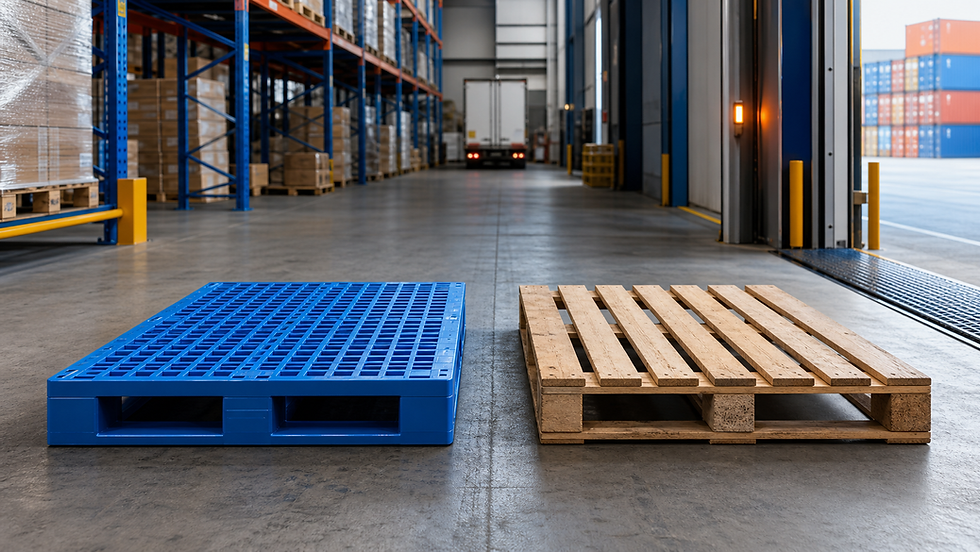
Grid-deck plastic pallets use an open surface that can reduce material weight, improve ventilation, and support general warehouse or cold-chain handling. They are a common option when airflow and easy rinsing are important.
Solid-top plastic pallets provide a smooth, continuous surface. They can be easier to wipe and help support small cartons, bags, or moisture-sensitive goods. They are often considered for food processing, pharmaceutical storage, clean warehouses, and applications where deck openings are not desirable.
4. Understand static, dynamic, and racking loads
Load ratings describe different operating conditions. Static load applies when a pallet is resting on a level floor. Dynamic load applies while it is being moved by material-handling equipment. Racking load applies when the pallet is supported in a rack. Do not select a pallet using only the highest number shown on a specification sheet; confirm the rating for your actual condition and how the load is distributed.
5. Check forklift and pallet-jack compatibility
Confirm whether you need two-way or four-way entry, the fork opening dimensions, underside structure, and the equipment used at each facility. Also note conveyor contact points, automated handling requirements, and whether the pallet must work with multiple types of equipment.
6. Match the pallet to the operating environment
Temperature, cleaning method, moisture, hygiene requirements, chemical exposure, and indoor or outdoor use can affect the recommended material and structure. For export logistics, confirm the destination, trip model, and any customer-specific packaging requirements.
7. When a custom plastic pallet makes sense
A custom pallet may be appropriate when standard dimensions, deck styles, entry patterns, reinforcement, or load requirements do not fit the system. JOIN Plastic supports custom size, color, deck style, loading capacity, material, logo marking, and barcode or RFID options for OEM and ODM projects.
Plastic pallet quote checklist
For a more accurate recommendation, provide: required length, width and height; product weight and load distribution; static, dynamic and racking load targets; rack span or support points; forklift, pallet-jack or conveyor details; temperature and hygiene conditions; estimated order quantity; and any color, logo, barcode, RFID or material requirements.
Quick answers for buyers
Are rackable and stackable pallets the same? No. Stackable refers to floor or load-on-load stacking, while rackable refers to support in a pallet rack. Some designs may support both uses, but this must be confirmed for the specific model and load.
Which deck is easier to clean? A solid top offers a continuous surface that is easy to wipe. A grid deck can provide drainage and ventilation. The best choice depends on the cleaning process and product being handled.
Can plastic pallets be customized? Yes. Dimensions, deck style, reinforcement, entry, material, color, logo marking, and identification options can be developed around an application.
What should I send for a quote? Start with dimensions, load conditions, handling equipment, storage method, environment, quantity, and customization requirements.


Comments